Good Metal Detecting Locations for Beginners
Disclaimer:
This post may contain affiliate links, which means I may receive a small commission if you make a purchase through my links, at no extra cost to you. As an Amazon Associate, I earn from qualifying purchases. Thank you for your support!
I’ve walked countless parks, beaches, and school grounds with my detector humming in hand, and I can tell you, some spots practically give up treasures. You’d be surprised what’s hiding just beneath the surface where people gather, play, and celebrate. The trick isn’t just knowing where good metal detecting locations for beginners are, it’s understanding why those places work. Let me show you the ones that consistently deliver, even when you’re just starting out.
Start at Playgrounds for Easy Beginner Finds

Playgrounds mightn’t seem like treasure hotspots initially, but they’re excellent starting points for beginners, full of easily recovered coins, tokens, and jewelry just below the surface.
Children frequently drop items, and digging in sand is simple, allowing for quick and easy recovery.
I always scan around swings, slides, and climbing frames where small hands often lose things from their pockets. The soft sand provides good target identification, minimizing time wasted on trash.
Most parks permit detecting with permission, making access straightforward. I’ve found dimes, rings, and even old tokens only inches down.
Concentrate on busy areas where families congregate, and search after weekends or events for recent losses.
Playgrounds provide consistent finds, perfect for gaining confidence and improving your technique. For a new detectorist, few locations are as dependable, or as simple.
Best Beaches for Beginner Metal Detecting
When the tide rolls out and the sand hardens underfoot, I head straight for the beach, because nothing beats saltwater detecting for instant rewards and beginner-friendly finds.
I check tide charts regularly; low tide uncovers fresh sand packed with dropped coins, rings, and charms.
Focus on high-traffic zones near lifeguard towers and beach access points, people fumble wallets and jewelry getting settled. Sand composition matters: fine, compacted sand holds targets better than loose, coarse grains.
I favor spots where water drains quickly, leaving a clean signal field. After-storm erosion zones are goldmines, exposing deeper layers.
Always scan the towel line, the dry sand where visitors lounge hides surface-level treasures. With a lightweight detector and saltwater mode engaged, even beginners score.
Beaches offer consistent, forgiving hunting with minimal digging. Just respect local rules and leave no trace.
Public Parks and Picnic Areas That Yield Coins
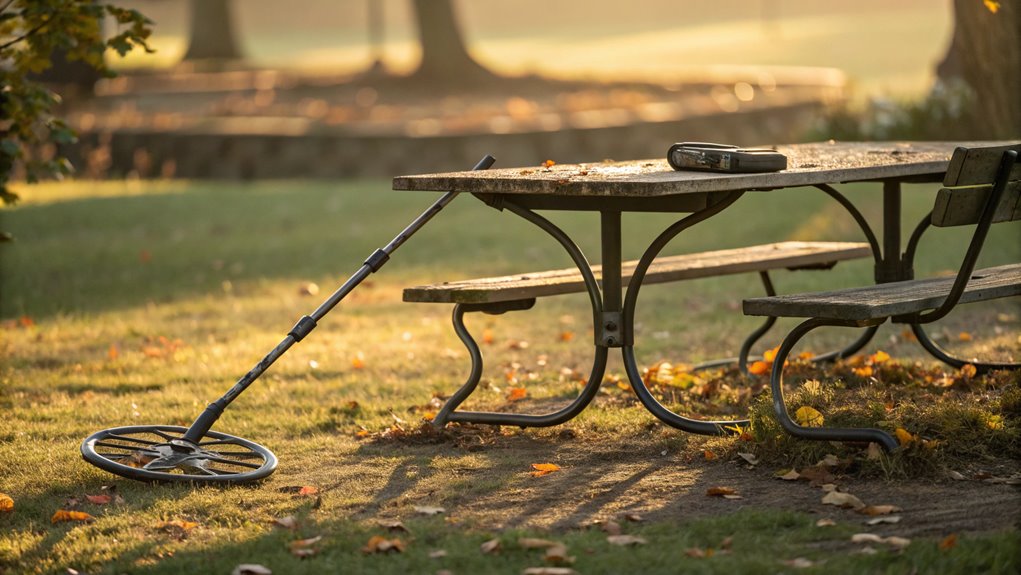
Public parks and picnic areas are excellent locations for consistently finding coins without extensive historical research, often outperforming rural sites due to high foot traffic and predictable behavior.
Specific areas within these locations, dictated by picnic habits – like cooler unloading or children at play – tend to be more productive, particularly near tables, grills, and benches.
- High-traffic city parks regularly produce modern coins and lost jewelry.
- Playground edges, especially in sand or mulch, often trap dropped coins overlooked by children.
- Picnic shelters accumulate coins around benches and grills following weekends.
- Sidewalks near park entrances are likely to contain loose change from pockets.
- Older community groves may conceal older relics where past gatherings occurred.
Focus on areas with soft soil and confirm they’re legally accessible for metal detecting; this minimizes effort while maximizing the potential for finding wheat pennies and silver coins.
Observing picnic patterns can quickly identify the most promising locations.
Schoolyards and Sports Fields: Hotspots for Jewelry
Schoolyards and sports fields are surprisingly productive locations for finding jewelry. Students often lose class rings near school entrances, while bleachers accumulate dropped earrings and bracelets during sporting events.
The areas around dugouts can yield vintage sports memorabilia, along with loose change and personal keepsakes discarded by players.
Concession stands and sidelines are also promising, the exchange of money often results in dropped coins, and enthusiastic crowds can lead to lost rings or pendants.
Even practice fields can be rewarding, as athletes sometimes empty their pockets before physical activity. I focus my searches on high-traffic areas like perimeter zones and well-worn pathways. With necessary permissions and a practical approach, these locations consistently offer worthwhile discoveries. Schoolyards aren’t just places for children; they’re potential treasure troves.
Everyday Neighborhood Spots That Yield Coins and Jewelry

Though they’re easy to overlook, the quiet corners of everyday neighborhood life hide more treasure than most beginners realize. I’ve found some of my best modern coins and forgotten rings just walking familiar routes with fresh eyes.
Sidewalks and curbs aren’t glamorous, but they’re goldmines where people fumble change, drop keys, or lose jewelry rushing to work or checking mail.
- Sidewalk strips near bus stops where riders shift bags and dig for change
- Curb lawns by mailboxes, daily drop zones for loose pocket items
- Gravel parking edges at local parks where cars door-ding rings and coins
- Picnic pull-offs with high turnover of casual visitors and snacks
- Pocket parks in older neighborhoods with years of light foot traffic
These spots are legal, easy to access, and often ignored. With soft soil and steady human flow, they’re perfect for beginners ready to dig smart.
Old Fairgrounds and Churchyards: Where History Meets Detecting (With Permission)
Searching an old fairground or churchyard with a metal detector isn’t simply coin hunting, it’s connecting with the lives of those who congregated, rejoiced, and commemorated in those locations.
I’ve unearthed silver coins under ancient trees and discovered buttons by long-lost paths, each artifact offering a glimpse into the past.
Relic hunting here carries a unique weight, it feels more profound. These historically significant sites favor diligent researchers.
My process begins with historical investigation, reviewing old maps or local records to identify areas of past activity. Obtaining permission is essential; I prioritize respecting property lines and building rapport.
Access granted often yields finds that embody the site’s character: fair tokens from the 1920s, a mourning brooch beside a churchyard wall. It’s purposeful detecting, every signal reveals a narrative.
Stay Legal: Where You Can (And Can’t) Detect
Respecting history means nothing if we don’t also respect the rules that protect it.
I’ve learned the hard way that permits, regulations, and permissions aren’t just red tape, they’re our responsibility.
- Always check local regulations before swinging your coil, some parks ban detecting outright.
- Public lands often require permits, especially near historic or protected sites.
- Permissions from private landowners can open hidden gems like old homesteads or farm lanes.
- National parks and monuments come with strict restrictions, most prohibit detecting entirely.
- Scout for posted signs or call park offices; ignorance won’t save you from fines or gear confiscation.
I stick to places where I’m welcome.
That way, I keep the hobby alive, stay out of trouble, and honor the spots I love to explore.
Use Local Clubs and Maps to Find Hidden Hotspots
I’ve discovered some of my best detecting locations through researching local clubs and studying old maps.
Metal detecting clubs are valuable resources, experienced members often reveal hidden parks, forgotten schoolyards, and promising fields overlooked from main roads. I learn from their expertise at meetings and online forums, focusing on access permissions and previous discoveries.
Combining this with historical maps creates a powerful research tool; former fairgrounds, trolley stops, and even lost homesteads become visible.
I always verify this information against current park regulations to ensure compliance. The thrill of uncovering coins, tokens, and relics deposited by years of foot traffic is unmatched.
Club research improves your skills, while map reading guides you to uncharted territory. Together, they transform speculation into precise locations, and new hobbyists into successful finders.
FAQ
I’ve hunted everywhere from city parks to forgotten homesteads, and if you’re just starting out, I’ll tell you exactly where to point your detector for the best chance at finds.
You’ll want the right gear, know when to search, and, most importantly, stay on the right side of the law.
Let’s break down the spots, tools, timing, and rules that’ll get you finding fast.
Best Spots To Start
While public parks and playgrounds might seem too obvious, they’re where I’ve consistently made my easiest finds as a beginner, coins, rings, and lost trinkets pile up fast in high-traffic spots like picnic shelters, sandbox edges, and sidewalk entrances.
Local parks and public spaces are goldmines because they’re used daily by families, joggers, and event crowds. You’d be surprised how often people drop something without noticing.
Stick to areas with soft ground or sand, where targets are shallow and easy to recover.
- Playgrounds with mulch or sand where kids dig and play
- Picnic zones near grills and benches with dropped change
- Sidewalk strips at park entrances where bags shift and pockets empty
- Schoolyard perimeters during off-hours (with permission)
- Beach towel lines at lakes or rivers after weekend crowds leave
Start simple, stay legal, and let the metal come to you.
What Gear To Use
When starting out, picking the right metal detector makes all the difference, go for a beginner-friendly model with built-in discrimination and ground balance so you’re not chasing every bottle cap or nail.
I recommend a detector with a 6- to 8-inch coil size; it’s light, maneuverable, and perfect for parks and playgrounds.
A mid-range frequency selection, around 7–10 kHz, handles most targets, coins, jewelry, relics, without overcomplicating things. Pair it with wireless headphones so you can move freely and hear subtle signal changes.
Don’t forget a sturdy digger and a finds pouch, sand and mulch areas eat small items fast. Stick to locations with soft soil or sand; they’re easier to dig and boost your success rate. With the right gear, you’ll spend less time fussing and more time finding. Trust me, the first ring or old coin you pull from a picnic site makes it all worth it.
When To Detect
Timing is key to successful metal detecting, turning a slow hunt into a rewarding one.
Scout for fresh opportunities immediately following park maintenance or public events, these are times when buried items are brought closer to the surface or new losses occur.
- Focus on beaches at low tide to reveal wet sand areas where rings and coins often appear.
- Detect during the golden hour, sunrise or sunset, for comfortable temperatures and fewer people.
- Search sports fields soon after games finish; lost change and tokens accumulate quickly.
- Visit parks on weekdays when there’s less foot traffic, but items lost over the weekend are still likely to be present.
- Check outdoor markets directly after they close, as vendors and visitors may leave behind small treasures.
Patience combined with strategic timing is more effective than expensive equipment.
Knowing the best time to search significantly increases your chances of finding relics and rings with less effort.
How To Stay Legal
You’ll save yourself a heap of trouble by treating local laws like your first real find, non-negotiable and worth digging into before you swing your coil. I always check regulations first; what’s allowed in one park could get your gear seized in the next. Permits are often required for public land, especially near historic sites. Never assume, always get written permissions when detecting on private property. It clears up liabilities and builds trust with landowners. I rely on local clubs and forums to stay updated on rule changes. Ignorance isn’t a defense if you damage a protected area or disturb relics. Respect restrictions, follow the rules, and you’ll keep detecting season after season. Stay legal, stay sharp, and let the hobby thrive.
Finding Lost Items
Though I’ve learned to trust my instincts over the years, I always let the site tell the story when hunting for lost items, because every coin, ring, or relic has a history waiting to be uncovered.
Successful item recovery starts with reading the landscape: high-traffic zones mean more coin hunting opportunities and better odds for modern finds.
- Playgrounds with loose mulch trap dropped rings and change
- Picnic shelters near grills and tables hide lost keys and jewelry
- Beach towel lines reveal shallow coins and forgotten trinkets
- Sidewalk entrances to parks collect metal as people juggle bags
- Old fairgrounds hold deeper relics from decades of foot traffic
I focus on spots where people pause, play, or prepare, those moments when items slip away. With the right conditions and a sharp eye, even beginners can recover meaningful pieces of the past.
Conclusion
I’ve chased treasures from sandy shores to city parks, and let me tell you, every beep could be a story. Starting simple taught me patience and respect for the hunt. With the right gear, a little research, and solid permission, you’ll find more than coins, you’ll uncover adventure. Stick with it, stay legal, and trust your instincts. The ground beneath you is full of secrets. I’ve heard them, and now, you can too.