Where to Metal Detect for Gold: Proven Locations That Still Pay
Disclaimer:
This post may contain affiliate links, which means I may receive a small commission if you make a purchase through my links, at no extra cost to you. As an Amazon Associate, I earn from qualifying purchases. Thank you for your support!
Knowing where to metal detect for gold is the key to improving your success, and it starts with understanding how gold moves and settles.
I begin by searching areas where gold naturally accumulates, such as inside bends of rivers and dark, heavy gravels where dense metals are trapped. I slowly sweep my coil over riffles, exposed bedrock crevices, and old flood bars, taking care to cover each section thoroughly.
Gold can also be found in caliche layers, desert washes, and abandoned mining dumps, all of which remain highly promising locations. Interested in learning how to choose your first prospecting location?
What Beginners Should Understand About Placer Gold Behavior

Placer gold behaves like tiny travelers, carried by water currents and deposited where the flow slows.
Beginners can learn to identify likely locations by understanding a few key principles. Gold’s high density causes it to settle more readily than most gravel, concentrating it in areas of reduced water energy.
Analyzing gravel composition reveals which layers are likely to contain gold and which are simply sand. Focus on dark, heavy concentrations within gravel bars and on the inside bends of rivers, as these areas indicate slower water and potential gold deposits.
Test promising locations with a gold pan or small sluice box, and maintain a curious mindset. This hobby is accessible, practical, and can be very rewarding.
Prioritize safety and patience, and enjoy the process of discovery.
Where Gold-Bearing Rivers and Streams Are Most Productive
Gold-bearing rivers are most productive where the water slows and deposits heavy gravel.
This guide shares simple spots for beginner detectors, focusing on ease and enjoyment.
River benches and bedrock crevices trap gold, so target gentle slopes and cracks with gravel accumulation.
Four practical tips to begin:
- Scan inside bends where currents deposit heavier material.
- Check behind boulders and along the edge of riffles.
- Examine gravel bars formed during floods.
- Probe river benches near old logs or exposed bedrock.
Patience will yield results in shallow, clear water and gentle eddies.
Bring a friend and enjoy the rewarding experience of finding gold.
How to Scan Lake Shores for Gold and Submerged Targets

When you scan lake shores, start where waves drop heavies into the sand.
Sweep slowly, listening for faint hits and feeling for subtle changes in the texture. Keep your effort steady and cover wide swaths, because shoreline concentrates can hide under wet sand near the waterline.
Use waterproof detectors so you can probe shallow water without fear, and check shallow pockets near rocks, logs, and driftwood.
Often focus on black sand streaks and washed gravel where small coins, rings, and tiny nuggets like to settle. Stay patient, adjust sensitivity lightly, and remember that practice builds confidence.
With the right gear, this hobby stays fun and rewarding. Grab a friend, share stories, and celebrate every little find together.
Finding Placer Gold in Desert Washes and Arid Regions
Desert washes are harsh yet hold gold for those who can read the ground.
As a fellow detectorist, I appreciate the excitement of simple finds.
In arid lands, patience and observation are key, particularly where water spread gravel and left clues in caliche layers.
Tips:
- Scan inside bends and near old stream beds where water slowed.
- Look for dark gravels and lighter patches from flash flood deposits.
- Check caliche layers for seams where gold accumulates.
- Use small, precise sweeps to avoid missing shallow pockets.
Desert ground is inviting, and with the right mindset, every trip can be rewarding.
Historic Mines and Mining Camps: Opportunities for Detectors

Old mines offer a uniquely exciting and rewarding detecting experience due to their rich history.
The ground often conceals tailings and ore piles that hint at past activity.
Focus searches near tram lines and mill sites for relics and coins, always prioritizing safety and obtaining necessary permissions.
Tailings may contain small metal fragments detectable with modern equipment and slow, deliberate sweeps.
While assays reveal historical ore richness, today’s targets include rings, buttons, and small nuggets.
Practice respect by filling all holes and leaving the site undisturbed.
Patience can yield relics and potentially rare coins at camps and ghost towns.
Maintain light gear, enjoy the hobby, and exchange information with fellow enthusiasts.
Ghost Towns and Mining-Era Dumps as Detector Ground
Ghost towns and old dumps are ideal locations for metal detecting. Exploring these sites is simple, fun, and often yields interesting finds.
I prefer to begin by scanning dumps, as each piece of metal or coin can suggest a story. Relic hunting is a rewarding hobby that connects us to the past.
Here are four tips I recommend:
- Walk slowly along former wagon trails and behind structures where trash accumulates, potentially concealing valuable items.
- Pay attention to faint signals near metal debris and tin cans.
- Investigate strong signals in areas with glass, bottle caps, and old nails.
- Respect private property and ensure you leave the site clean.
With patience, you may uncover historical treasures.
Gold Detecting on Public Lands: Permits, Access, and Rules
Public lands are open to metal detecting in many places, but you must follow permits and rules.
I’ll walk you through simple steps to stay on the right side of the law while having fun.
First, check if the area uses claim staking, and always ask landowners for permission before detecting.
Public lands may have federal regulations that limit digging, require backfill, or ban artifacts in parks. Learn the local rules, carry a map, and respect signs, guardrails, and wet areas like streams.
If in doubt, contact the agency, bring your detector, and show them you care about the land.
Hidden Spots for Modern Gold Jewelry and Rings
Rules for public lands can feel limiting, but modern jewelry still hides in surprising places.
I’m here to share my tips, so you feel confident, and you can enjoy every outing.
Lost jewelry shows up in spots you wouldn’t expect, and park finds can be real winners if you keep your eyes open.
Here are solid ideas to try:
- near benches and picnic areas where people sit,
- along walking paths under shade trees where rings drop,
- around playgrounds after school hours,
- at popular event spots like fairs when crowds thin out.
With a friendly vibe, you’ll stay safe, have fun, and uncover small treasures while you explore.
Share photos, swap stories, and celebrate every tiny treasure you find as a team.
Keep detecting, stay curious.
Urban and Waterfront Recreational Ground for Detectorists
For detectorists who enjoy casual outdoor adventures, urban and waterfront areas offer excellent opportunities.
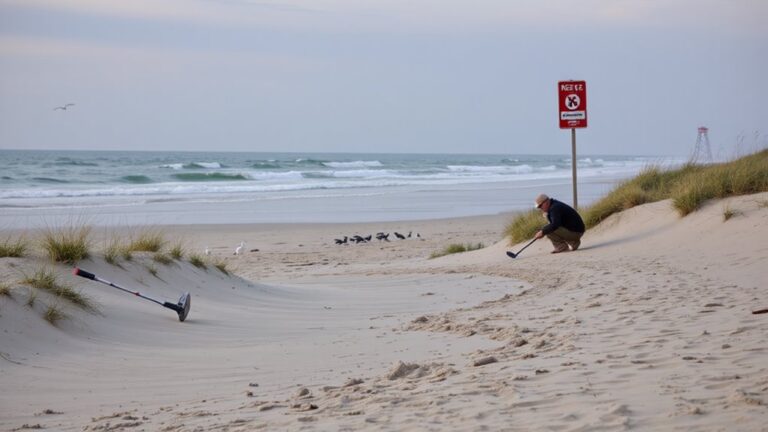
Parks and beaches are ideal for finding small items, providing a sense of close-range excitement. Parks typically yield coins and rings buried in grassy areas and around benches and play equipment.
Beaches, particularly after storms, can contain fine gold and heavy mineral concentrations in the sand. Essential gear includes a small scoop, a pinpointer, and a headlamp for low-light conditions.
Always verify and adhere to local regulations, minimize disturbance, fill all holes, and respect property boundaries. Concentrate searches along boardwalks, near picnic areas, and around waterfront stairs.
Unexpected detector signals can transform ordinary outings into rewarding treasure hunts. Embrace your curiosity, and you’ll find yourself returning for more.
Frequently Asked Questions
How Do Seasonal Changes Affect Gold Targets and Detection?
Seasonal changes affect targets and timing. Winter thaw loosens frozen ground and introduces fine gold into gravels, while spring floods move concentrates downstream, exposing some patches and covering others, requiring adjustments to both equipment and timing.
What Detector Signals Are Common Besides Gold in Gold Grounds?
Besides gold, I often hear signals from iron and mineralization that mimic nuggets; I treat them as indicators to adjust search areas, vary coil depth, and distinguish non-targets through careful pattern analysis and ground balancing.
How to Identify Pay Streaks Without Digging?
Pay streaks are identified through visual cues and target clustering. I locate them by slowly and methodically gridding an area, observing repeatable signals, and mapping consistent concentrations across gravels and benches, all without digging for easily visible nearby patterns.
Which Detectors Are Best for Jewelry Versus Nuggets?
High-frequency detectors with strong discrimination are best for jewelry, helping to separate unwanted trash. For nuggets, I prefer mid-to-low frequency detectors with stable ground coverage. Optimizing performance involves adjusting frequency and discrimination settings based on ground conditions, target size, and mineralization.
What Are Effective Techniques for Minimizing Ground Damage?
To minimize ground damage, I use Pinpointing with slow, deliberate sweeps, lift the coil frequently, and replace dug turf. Careful sweeping is practiced near roots, rocks, and sensitive areas, avoiding unnecessary disturbance while documenting finds.
Conclusion
Gold hunting is fun and achievable, even for beginners seeking a rewarding hobby. Patience, careful sweeping, and attentive signal interpretation can transform quiet beaches, river bends, or old camps into productive sites. A lightweight detector, a shovel, and a curious mind are essential – every outing feels like an adventure. Stay safe, respectful, and continue hunting.