Florida Beach Metal Detecting Guide: Tips, Rules, and Top Spots
Disclaimer:
This post may contain affiliate links, which means I may receive a small commission if you make a purchase through my links, at no extra cost to you. As an Amazon Associate, I earn from qualifying purchases. Thank you for your support!
The Florida Beach Metal Detecting Guide will help you start hunting beaches safely and successfully. Learn the rules, target wet sand near the waterline, wear sunscreen, and bring a lightweight scoop with a VLF or PI detector.
Always check for signs, respect private beaches, and ask about permits if needed. You can find coins, rings, and other keepsakes, but remember to fill holes and report older finds—curious about what comes next?
What You Can Do on Florida Beaches: Detecting Rules at a Glance
Florida beaches are open to metal detecting for the most part, but rules vary by location. You can usually detect on wet sand and near the waterline, but you should respect posted signs and private property. General allowances let you search for modern coins, jewelry, and lost items, while local restrictions may limit beaches, dunes, or times of access.
No state permit is required on most public beaches, yet some towns offer simple permits you can obtain at an office or online. Always report items over 50 years old found on state lands, and avoid protected areas like national parks. Check with lifeguards or park offices if you’re unsure, and enjoy the hobby responsibly. Bring a friend, stay hydrated, and keep beaches fun for everyone. For optimal results in wet sand and saltwater environments, consider a detector with multi-frequency detection capability.
Where You May Detect on Florida Beaches Today
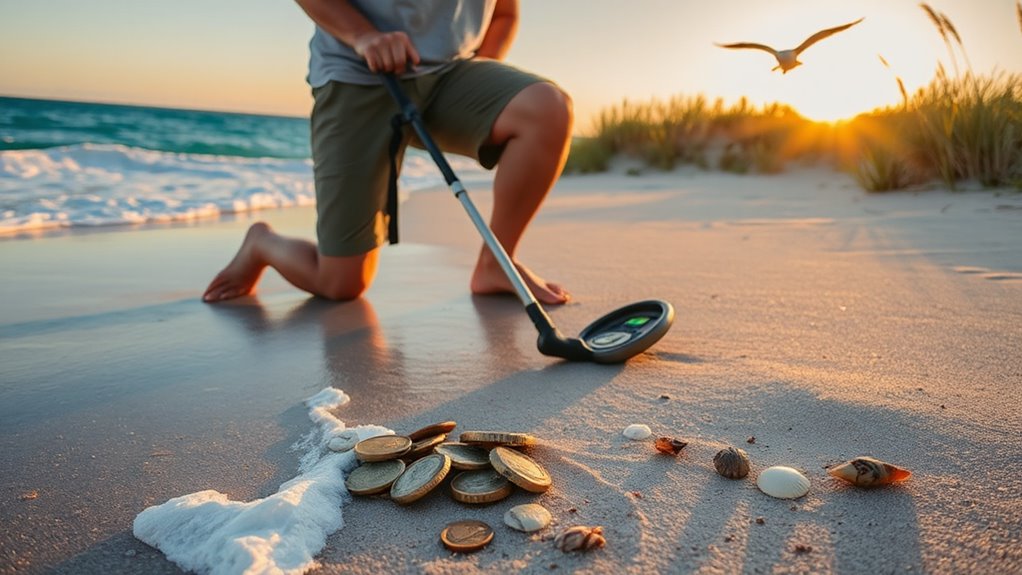
You’ll notice that most public beaches allow hunting from the wet sand up to the toe of the dunes, with a few local rules to mind. On non-park beaches you usually hunt the wet sand and the shore, and you should avoid vegetated dunes. In Treasure Coast, you can search between mean low tide and the dune toe, but stay clear of wreck sites and lease areas.
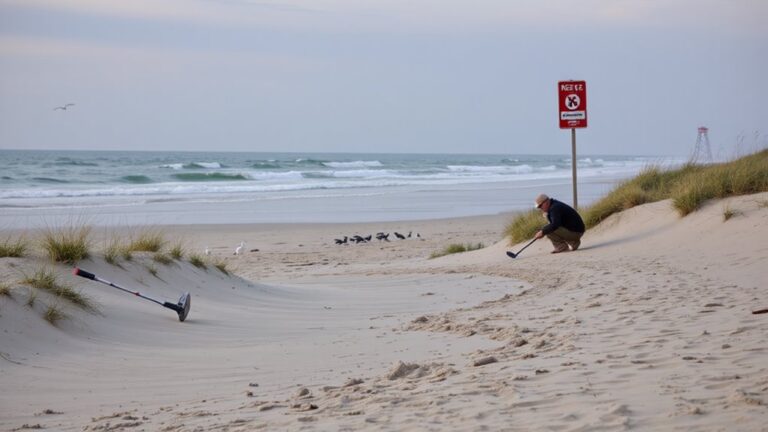
Emerald Coast and Panhandle beaches are popular for beginners and families, with friendly rules and visible signs. Always check posted rules at lifeguard stands or park offices before you start. Private beaches require landowner permission, and you must respect any lease areas to stay legal. Happy hunting and careful digging makes beach treasure fun for everyone. A waterproof metal detector like the MINELAB Equinox 900 ensures reliable performance in wet sand and saltwater conditions.
Permits, Property Rules & What Triggers a Permit Exception

Permits may be issued by towns or parks, and certain rules apply near private beaches. You trigger a permit exception if you’re digging in leased or protected zones or in restricted dunes. Check signs, ask a lifeguard, and respect closed areas to stay compliant and have fun. Detectors with waterproof coils can be used safely near wet sand and shallow water, but always ensure you’re within permitted areas.
Permit Triggers
Rules kick in when you reach certain zones or special areas, and they’re straightforward to follow. When you’re beach hunting, you’ll notice that some spots require a permit, while others are open to everyone. Local permits and municipal codes shape what you can do and where you can dig. Keep this quick checklist in mind: determine if you are in a state park, a city park, or a private stretch, and ask staff before you start. If a zone needs a permit, you may be asked to show it or to avoid the area. Grants or exceptions can exist for volunteers, detectors in training, or special events, so stay flexible and politely ask for guidance. Have fun.
Property Access Rules
From the permit triggers you just read about, access rules now shape where you hunt. On beaches you can usually hunt without a permit, but rules differ by county. If you find property, you must have landowner consent before digging. Private property needs written permission, and trespassing rules still apply. Check signs, ask at the office, and learn today which areas allow digging. If a permit is needed, apply early and follow limits on hours, tools, and holes. This keeps you legal, the beaches friendly, and the hunt more fun. Remember, rules protect people, property, and history while you enjoy finds. With clear plans, you learn fast and locate better spots. All of this helps you enjoy Florida beaches while staying respectful and safe.
Gear and Techniques for Wet-Sand Detecting in Florida
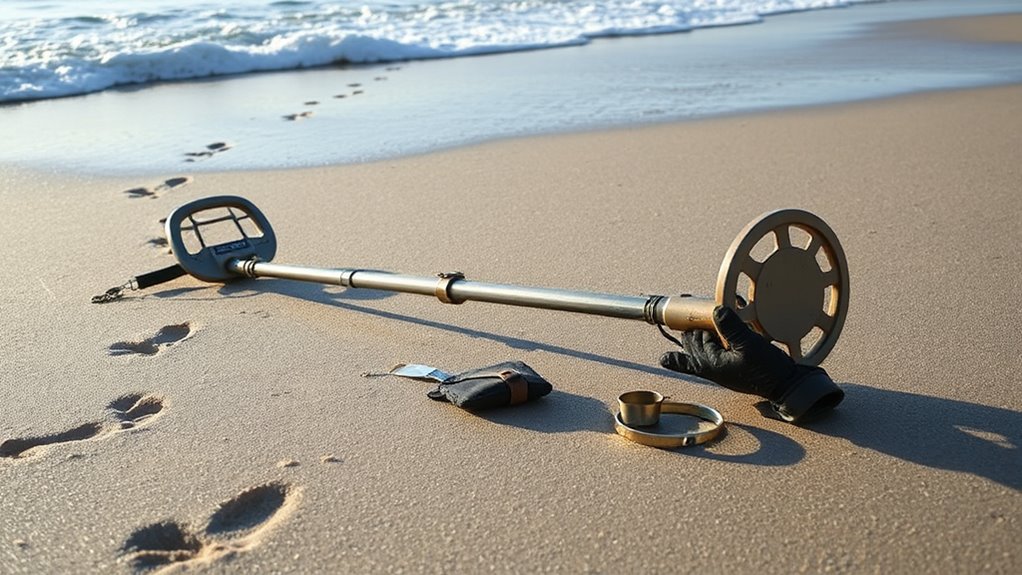
If you’re new to Florida beaches, wet-sand hunting is friendly and full of targets. As you scan the wet strip, you’ll find rings, coins, and small trinkets, so stay steady and scan slowly. Use the tips you already know and trust your ears for faint signals near the surf, where moisture helps metals show up.
Choose detector types that handle salty sand well, like VLF or PI units, and adjust the ground balance for Florida’s minerals. Bring a lightweight scoop that fits your height and never over-dig; practice shallow holes rather than deep ones. Keep your pouch handy and replace sand softly to protect the area. Practice safe hunts after storms, and respect posted rules on every beach. Have fun and keep learning.
Finds on Florida Beaches: Ownership, Reporting & What Counts as Loot
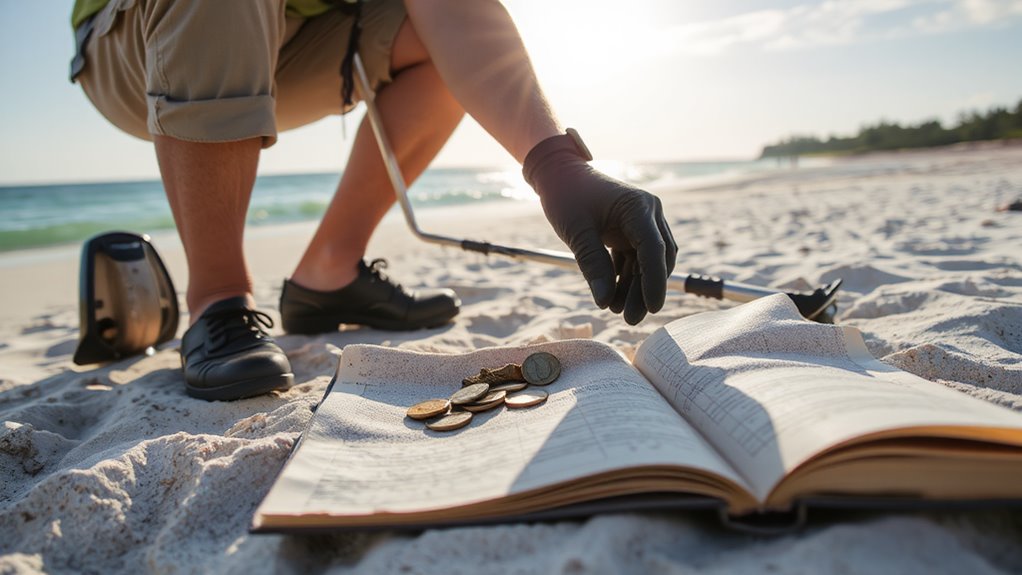
After discussing wet-sand finds, it’s useful to know who owns what you pick up. On public beaches in Florida, most modern items such as jewelry and coins are generally considered to be the property of the finder, but local ordinances vary by city or county. If you find relics or items older than 50 years on state lands, you must report them to the proper authorities through the state’s historic-preservation channels. When in doubt, check local rules, because tampering with historic items can carry penalties. If someone reports a lost item, you can help by returning it, and you may receive thanks or a small reward. Keep records with dates and locations to protect yourself and improve your future finds. Fill your bag with stories, but share them kindly and follow rules every day.
Safety, Ethics & Environmental Respect When Detecting on Beaches
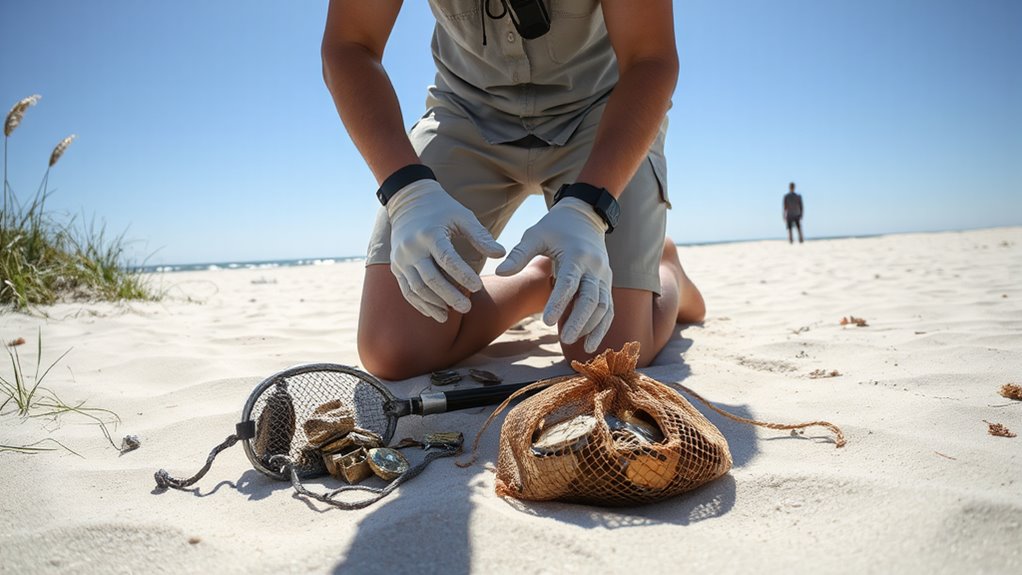
Safety comes first when you’re beach hunting. Wear sunscreen, sturdy shoes, and gloves, and stay hydrated. Plan ahead to have more fun and keep rules in mind. Check local signs, ask lifeguards if unsure, and respect dunes and wildlife while you hunt. Keep holes shallow, fill them, and leave the beach cleaner than you found it. Be mindful of rip currents and storms, and never swim alone after dark. Bring water and take breaks in the shade to stay sharp and happy. If you find something old or valuable, report it according to local rules and share with the appropriate authorities. Stay patient, stay curious, and enjoy the adventure with respect for people and places. Safe practice helps everyone have a good day.
Frequently Asked Questions
Do I Need Permission to Metal-Detect Private Beachfront Property?
Yes, you need permission from homeowners before metal-detecting private beachfront property. Even with public beach access, respect posted signs, trespass rules, and landowner consent to avoid fines, confiscation, or criminal charges. Always verify before entering.
Are There Age Restrictions for Detectors or Treasure Finds?
There aren’t age-specific limits for detector use, but you should supervise juniors; junior detectors can participate with parental consent. Your finds follow the rules, and legal ownership applies to state-land discoveries, especially items older than 50 years that require reporting.
Can I Keep Artifacts Found on State Lands Under 50 Years Old?
No. Artifacts found on state lands are generally not yours to keep, even if they are under 50 years old. You are typically required to report the find to the managing agency or state archaeology program. The state may claim ownership or confiscate the items, and penalties can apply for unauthorized excavation or removal. The idea of “finder’s keepers” does not apply to state archaeological resources.
What Penalties Apply for Detecting in Lease Areas or Wreck Sites?
Penalties are severe: federal fines, seizure of equipment, and criminal charges for detecting in lease areas or wreck sites. Unauthorized recovery may be prosecuted as Archaeological resource violations, with possible confiscation of recovered items, civil penalties, and other legal consequences.
Are There Depth Limits for Holes on Florida Beaches?
Yes. On many Florida beaches, hole depth is limited to about 12 inches. Keep holes small, and always refill them with sand before you leave to protect the beach, other users, and the dunes.
Conclusion
You can start on Florida beaches with simple gear and a curious mindset, and you’ll discover how fun metal detecting can be. Stay near the waterline, respect posted signs, and ask for permits when needed, because good permits protect spots you love. Learn to skim wet sand, use a light scoop, and report old finds from state lands. Most days bring coins, rings, or a neat surprise, so grab your detector and enjoy the hunt today.