How to Search for Gold With a Metal Detector – Expert Tips & Techniques
Disclaimer:
This post may contain affiliate links, which means I may receive a small commission if you make a purchase through my links, at no extra cost to you. As an Amazon Associate, I earn from qualifying purchases. Thank you for your support!
How to Search for Gold With a Metal Detector, you can start right away with a basic VLF detector, stick to smooth ground, and grid your search so you don’t miss spots.
Pick a coil for shallow gold, balance the ground, and test dig deeper by listening for tones.
Keep your sweeps slow and overlaps tight, mark good spots with stakes or GPS. It’s a hobby you can enjoy on hunts, and you’ll get practical, repeatable results as you go, so stay tuned.
How to Choose a Gold Detector for Your Conditions
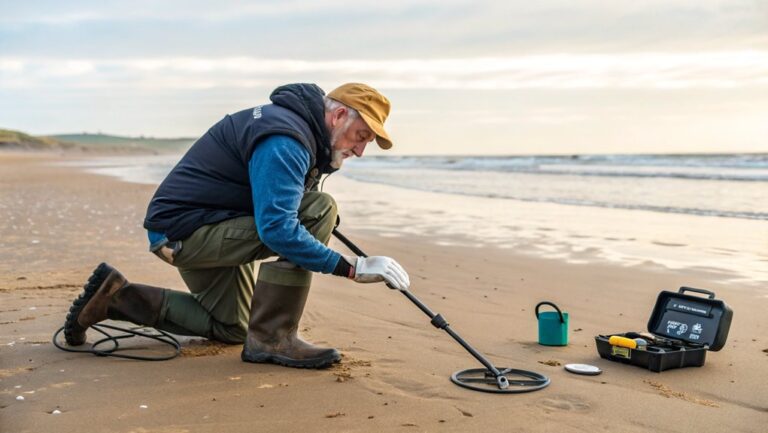
Choosing a gold detector starts with your local ground conditions and goals. Balance your budget with what you want to find, and pick a detector weight you can handle all day. If you hunt near shallow gold, a light VLF model feels quick and easy, while PI (pulse induction) performs better in tough ground. For salty beach spots or mineral-rich soil, a tougher detector helps, but it will weigh more. Test models in a store, compare weight by lifting them, and ask about features that are gentler on the lungs. Remember that budget and detector weight matter, so choose something you enjoy using on every hunting trip. Detectors with 45-71 kHz frequencies offer superior sensitivity to small gold nuggets in varying soil conditions.
Ground Conditions and Coil Options for Gold Prospecting
You’ll notice soil mineralization changes how deep and easy detection is, so adjust your settings accordingly.
Coil choice matters: Double D coils help with mineralization, Concentric coils give clearer IDs, and Widescan coils perform better in tough ground.
Start simple on a mild day, test in creek beds, and you’ll see how ground cues guide your search gains.
For optimal results in mineralized ground, use a detector with adjustable ground balance technology to maintain detection depth and target accuracy.
Soil Mineralization Impacts
Mineralized soils can trick detectors, making targets hard to see and causing false signals. You notice mineral effects when a faint beep jumps or vanishes as you move the coil. To overcome this, set the ground balance correctly and test the area before you search. Keep the detector steady, and adjust sensitivity so you can still hear small nuggets without chasing noise. Learn to read tone shifts and use a slow, sweeping motion. Practice on familiar ground, compare areas with different mineral content, and stay positive about every new find. Gold awaits and the hunt shines. For gold prospecting in highly mineralized soil, choose a model with ground balance adjustments to improve detection accuracy.
Coil Options By Ground
When you hunt in mixed ground, the right coil makes all the difference for gold. You’ll feel the ground response through the coil, and that tells you where to sweep. Coil selection matters in rough soil, dense mineralization, or wet ground, helping you keep signals steady. A Double D reduces mineral noise, while Concentric fits easy ground and clear targets. For highly mineralized sites, try a Widescan to calm interference. Practice with tiny targets, adjust sensitivity, and keep sessions fun. With the right coil, gold hunting stays practical, engaging, and rewarding. You will gain confidence and better treasures.
Plan Your Search: Grid the Site and Prep the Area

First, grid the search area by laying stakes or string to map every foot, so nothing gets missed. Prep the prospecting zone by clearing brush and noting promising spots, like creek bends or mineralized patches. Bring a simple map, mark GPS waypoints, and plan sweeps in tight grids so your finds pile up.
Grid The Search Area
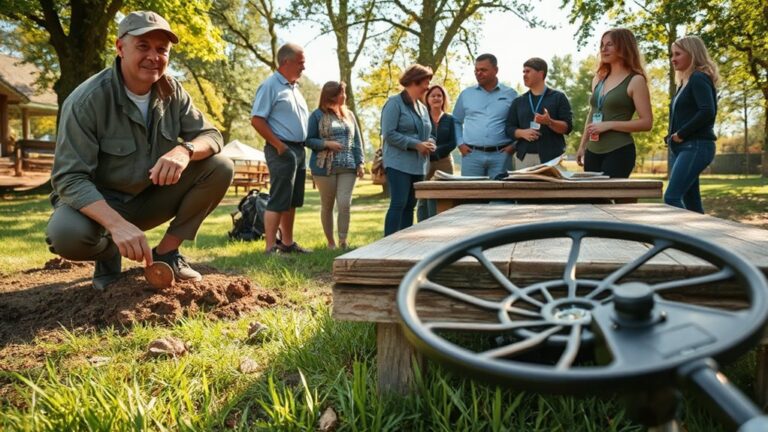
If you start with a clean plan, grid the site first to map every inch you’ll search. Lay stake lines at regular intervals so you can see where you’ve scanned and where you haven’t. This is all about systematic coverage, not guesswork, so you move slowly and keep your coil close to the ground. Use a simple grid, like squares or rectangles, then work one square at a time. Swing steadily, overlap passes, and mark any promising targets. GPS waypoints help you return later, keeping the area organized and inviting. You’ll feel confident and ready to explore.
Prep The Prospecting Zone
With a clear plan, you’ll map the area by gridding the site and marking every zone. You study the ground, check the weather, and set a steady pace so you enjoy the hunt. Next, brush clearing helps you see open areas clearly and keeps you safe while you search. You outline target areas where signals tend to hide, then note promising spots on a map or phone. Keep routes simple, mark hazards, and plan breaks to stay sharp. When you prep, your searches feel smoother, faster, and more rewarding for beginners and pros alike in every outing.
Master Gold-Targeting by Detector Mode (VLF, IB, PI)
Switching between VLF, IB, and PI modes makes gold hunting feel like a smart game. Pick a mode based on what you want to find, then read the signal analysis and adjust. VLF helps the small nuggets, IB is easy to use, and PI shines in tough ground. When you switch modes, listen for steady tones and note if targets disappear near mineral rocks. Practice simple steps: sweep slowly, and do two passes to compare readings for better accuracy. Remember, detector mode choices affect depth and speed, so stay curious and enjoy learning with every hunt. You’ve got this.
Tune and Test for Depth in Mineralized Ground

In mineralized ground, you tune your detector and test depth to separate junk from real gold. Start with sensitivity settings set a notch below the max to avoid false signals, then lower if the ground buzzes too loud. Ground balance helps you ignore mineral noise, so you can hear true targets clearer. Do quick test digs at known spots, compare responses with and without recalibration, and note how depth changes with coil size. Practice in mild mineral zones first, then push into tougher ground, always logging what works. Stay curious, patient, and celebrate small finds along the way today.
Troubleshoot Common Gold-Prospecting Issues and Refinements
Sometimes your detector buzzes or misses gold because settings drift, so you recheck the basics. If targets disappear, try re-grounding, adjust sensitivity, and confirm you’re in the right gold mode. False signals pop up when junk or mineralized ground fools the coil, so listen for a steady threshold. If you see signal fading, move the coil slowly, re-sweep, and check different angles. Clean the coil, battery, and connectors, since dirt or corrosion can mute tiny targets. Keep notes, compare finds, and refine your search grids until accuracy improves. Prospect with friends, stay curious, and enjoy the steady, rewarding process.
Frequently Asked Questions
How Do I Read Subtle Signal Variations for Tiny Gold?
You listen for subtle audio cues and watch signal phasing closely, adjusting sensitivity and ground balance until tiny targets produce consistent shifts. Follow consistent coil sweeps, compare directions, and trust patterns to identify faint signals.
What Settings Optimize Depth in Mineralized Ground?
Balance the ground first, then optimize depth by selecting the appropriate frequency for mineralized ground. Minimize interference and fine-tune ground balance to stable thresholds. Use a deep-coil setup and moderate sensitivity for best depth today.
Can I Detect Gold Underwater With Common Detectors?
Yes, you can detect gold underwater with detectors, but choose models designed for water use. In saltwater, use a PI or VLF detector with a waterproof coil and housing; in freshwater, many VLF or PI models work, provided the coil and housing are waterproof.
Which Coil Type Best Balances Depth and Mineralization?
For a balance of depth and mineralization handling, use a Double-D coil, optimizing coil size and operating frequency to maximize depth while minimizing mineralization interference. Depth is achievable in both PI and VLF modes; choose a mid-sized coil for versatility across different ground conditions, and adjust the frequency to suit the mineralization of the ground.
How Often Should I Recalibrate for Changing Ground?
Recalibrate whenever the ground shifts noticeably or you switch to a different ground type, especially on mineral beaches. Recalibrate whenever you notice instability, an erratic threshold, or changing responses from your detector to maintain reliable performance.
Conclusion
To truly enjoy gold hunting with a detector, start simple. Choose a suitable detector, learn ground balance, test digs, and stay patient. Sweep slowly, overlap each pass, and mark promising spots with stakes or GPS. Create small clues, like creek bends or distinctive tones, and keep notes for future hunts. With planning, practice, and friends to share finds, prospecting stays fun, rewarding, and totally doable. You’ve got this, treasure awaits next.