How Deep Do Metal Detectors Detect? Understanding Detection Depth Limits
Disclaimer:
This post may contain affiliate links, which means I may receive a small commission if you make a purchase through my links, at no extra cost to you. As an Amazon Associate, I earn from qualifying purchases. Thank you for your support!
How Deep Do Metal Detectors Detect is a question that blends science with a bit of luck.
You can think of how deep your metal detector goes as a mix of tools and ground, not magic.
Bigger, conductive targets in dry soil show up deeper, while small coins or wet mineral soil stay shallow.
Coil size, frequency, and the detector type change the depth, so you’ll see different results from field to field.
Want practical tips that keep your finds realistic and fun?
Let’s explore what actually limits depth and how to work with it.
What Determines Metal Detector Depth?
If you want to know what controls detector depth, you look at several factors. Target composition matters, as different metals respond differently to the coil. Conductivity levels also play a big role, since highly conductive targets show up more clearly while less conductive ones are harder to detect. Soil moisture and mineral content can dampen signals, so you may need to adjust expectations based on ground conditions. Bigger search coils reach deeper, and lower frequencies help with larger targets. Practice helps you learn what works in your area, making the hobby easy, fun, and rewarding. Stay curious, test often, and share your finds. Beginner models typically achieve a detection depth of 8-11 inches in ideal soil conditions.
How Coil Size and Frequency Affect Depth
Choosing a larger coil increases depth but reduces sensitivity to small targets. A lower frequency helps with deep, large targets like coins, while a higher frequency improves sensitivity to small targets such as gold. Start with a mid-size coil and test different frequencies, noting how depth changes in your soil. Double-D search coils are especially effective in wet, salty beach environments due to their stability and resistance to mineralization interference.
Coil Size Depth Tradeoff
Coil size is a big tradeoff: bigger coils reach deeper, but they may miss tiny targets. Larger coils cover more area, but you might lose sensitivity on small items. To balance, use mid-sized coils for everyday hunts and switch when you need more depth or detail. Remember, a lighter, easier hunt keeps you excited and makes the hobby fun.
- Choose mid-sized coils to balance depth
- Test different sizes at the park often
- Remember bigger coils require faster sweeping
- Keep weight comfortable so you hunt longer
- Mark targets on a map to compare results
Frequency Depth Tradeoff
Even beginners can tune depth by selecting coil size and detector frequency thoughtfully. In this Frequency-Depth Tradeoff, you balance coil size, frequency, and target depth. Lower frequencies penetrate deeper for larger targets, while higher frequencies increase sensitivity to small items, so you trade strength for precision. If you notice signal loss in mineral-rich soil, try a lower frequency or a larger coil to recover depth. Remember: frequency matters, but it isn’t the only factor, test in your area and adjust. Practical tip: start with a medium coil and a mid-range frequency, then fine-tune based on results for best success. Detectors with 45 kHz VLF technology offer enhanced sensitivity to small gold nuggets while maintaining reliable depth in mineralized ground.
Depth Ranges by Detector Type and Target
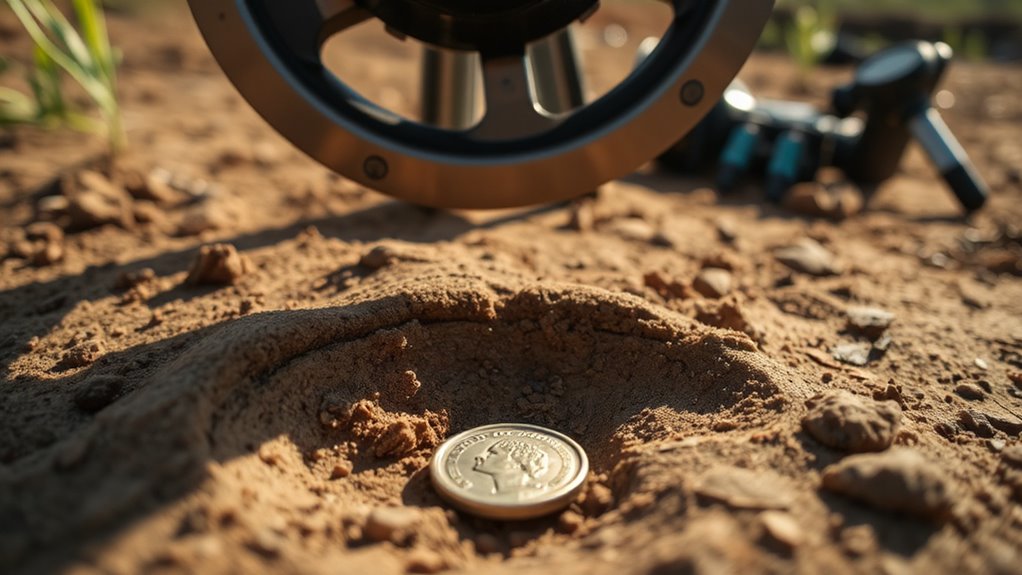
Because targets vary in size, different detectors reach different depths. Depth depends on detector type and target characteristics. You feel the thrill when a coin, a ring, or a relic appears deeper than you expect. As you choose a detector, consider target size and object composition to set realistic ranges today.
- Target size influences depth: larger targets go deeper and are often easier to detect.
- Object composition affects conductivity and the signal depth for metals.
- Low frequencies generally push deeper, especially for larger targets.
- Larger search coils reach farther but may reduce sensitivity to small targets.
- Realistic expectations and practice help you enjoy treasure hunting.
Real-World Limits: Soil, Moisture, and Interference
You’ll notice soil moisture changes can make targets harder to find, especially when your ground is wet or dry. Ground noise from minerals and moisture adds extra hum in the coil, so try a slower sweep and stable settings. If you work through wet soil, you can still hunt by pre-sieving and using smaller coils.
Soil Moisture Variability
When moisture varies across a field, your detector behaves differently, and depth changes as you move around. Shade, sun, and wet patches shift signals, so you get different depths as you walk. Hydration impact and soil checks help you plan hunts, stay patient, and enjoy the process, because moisture changes teach you practical field habits.
- Note how hydration impact changes how signals sound, with practice daily
- Watch saturation levels, as damp soil can hide coins
- Dry pockets and wet seams create inconsistent replies
- Carry a water bottle to stay sharp outdoors
- Test known spots first to calibrate depth expectations
Ground Noise Interference
Ground noise can affect readings, but you can adapt and improve. Soil moisture, minerals, and nearby electronics create electromagnetic interference. You may notice signal distortion near power lines, hot rocks, or wet ground, making targets harder to read. To reduce this, maintain steady motion, adjust ground balance, and use headphones to ignore hums. Choose quieter areas, switch to a lower frequency for deep targets, or use multiple frequencies if available. Keep your detector clean, check coil grounding, and stay patient for clear signals and rewards.
Reading Depth Readouts: How to Interpret Signals

Depth readouts can be deceptive. You’re not just chasing depth; you’re reading clues from your detector. In practice, monitor signal strength and target ID to judge if a target is real. Move slowly, listen for a steady tone, and compare readings from different coil sizes. A strong signal with a clear target ID usually means a solid find, while weak or fluctuating numbers may warn of junk.
- Understand signal strength values and what they imply
- Check target ID stability during sweep
- Compare readings across coil sizes and configurations
- Look for consistency on successive passes
- Test signals in quiet, interference-free areas
Tips to Maximize Depth in Practical Searches
Sure, you can push depth by tuning a few simple, practical tricks. Start with slow sweeps and steady movements so the coil reads targets clearly. Keep ground balance tuned to your soil, not the beach, for steady depth gains. If your signals fade, slow down, pause, and sweep again from different angles. Opt for a slightly larger coil when you search wide-open lawns or fields, but test sensitivity on small targets first. Moist soil can affect signals, so adjust expectations and re-sweep after watering to verify. Remember, practice makes perfect, and every hunt becomes more enjoyable as depth improves for you.
Frequently Asked Questions
Do Different Ground Minerals Permanently Affect Detector Depth Across Sessions?
Not permanently. Ground minerals can change depth from session to session because mineralization affects ground balance. Rebalance the ground calibration each time you move to a new area or when mineral content changes. If the soil stays highly mineralized, you may see shallower readings until you re-check ground balance and adjust settings such as frequency and coil size to restore performance.
Can Detector Depth Improve With User Practice or Scanning Techniques?
Yes, you can improve depth with practice and smart techniques. By optimizing swing speed, maintaining consistent coil overlap, and scanning ground methodically, you can boost signal strength and target discrimination without sacrificing depth potential in challenging terrain.
Does Detector Age Degrade Depth Performance?
Yes, detector age can reduce depth. Over time, component drift and coil decay can weaken signals and reduce target depth. Regular recalibration and coil maintenance can help restore some depth.
How Do Oxidized or Weathered Targets Affect Depth Readings?
Oxidized or weathered targets weaken the signal, making readings harder to detect; larger targets still produce deeper signals, while small targets fade. Expect weaker signals with corrosion, so evaluate both target size and signal strength together.
Is Depth Different When Using Headphones Versus Built-In Speaker?
Depth itself does not change, but headphones can improve audio quality and signal clarity, causing you to perceive targets differently. You will hear subtler cues, while built-in speakers may muddy signals, masking depth indicators and target responses.
Conclusion
You can see why metal detecting is such a fun hobby once you try it. With the right coil, a little patience, and good ground, you can uncover coins, rings, and lost treasures in parks, beaches, or yards. Start with easy targets, learn your signals, and stay safe on wet days. Keep your expectations realistic, celebrate small finds, and enjoy the hunt together with friends. It’s approachable, rewarding, and always worth a swing of the coil.