
Metal Detector Depth Settings Guide – Maximize Your Search Performance
Disclaimer:
This post may contain affiliate links, which means I may receive a small commission if you make a purchase through my links, at no extra cost to you. As an Amazon Associate, I earn from qualifying purchases. Thank you for your support!
In the Metal Detector Depth Settings Guide, you can boost depth by tuning sensitivity and ground balance for your soil, then picking the right coil and frequency.
Start with a stable target when you adjust, then test different coils to see which digs deeper in your area.
Lower frequencies stretch for big targets, larger coils grab more depth, and practice smooth, slow sweeps to cover every inch.
It’s all about approach and patience, so stick with it and see what hides just beneath the surface.
Maximizing Depth: Core Potential and How to Achieve It

Maximizing depth starts with understanding your detector’s core potential and how to realize it. You’ll go deeper by knowing the Target size you chase and how soil type affects signals. Start with a simple test, sweep slowly, and watch for steady readings, not fuzz. If readings drift, pause, adjust coil height, and try again. Practice at a known site to learn how Target size changes depth perception. Keep notes on conditions, weather, and mineral pockets, because good habits boost results. With patience, your next find will feel closer, and treasure hunting stays fun for you, every outing becomes exciting. A waterproof design ensures reliable performance in wet sand and shallow surf, especially when hunting at low tide or along beach cuts, so choose a model with waterproof to 16 ft.
Tune Depth: Set Sensitivity and Ground Balance for Your Soil
Now that you’ve got the basics, tuning depth starts with two simple knobs: sensitivity and ground balance. We tune like you’re adjusting a radio, listening for steady signal stability and smooth responses. You’ll find a sweet spot by increasing sensitivity until the clicks get jumpy, then back off a bit for stable depth. Ground balance matters too, especially in mineralized soil, because mineralization can hide coins. Test in a familiar patch, compare dry and wet conditions, and remember patience pays off. With practice, depth becomes practical and enjoyable. Stay curious and enjoy the hunt. For accurate target identification in challenging soils, an upgraded chip enhances detection clarity and response speed.
Choose Coils and Frequencies: Which Hardware Maximizes Depth?
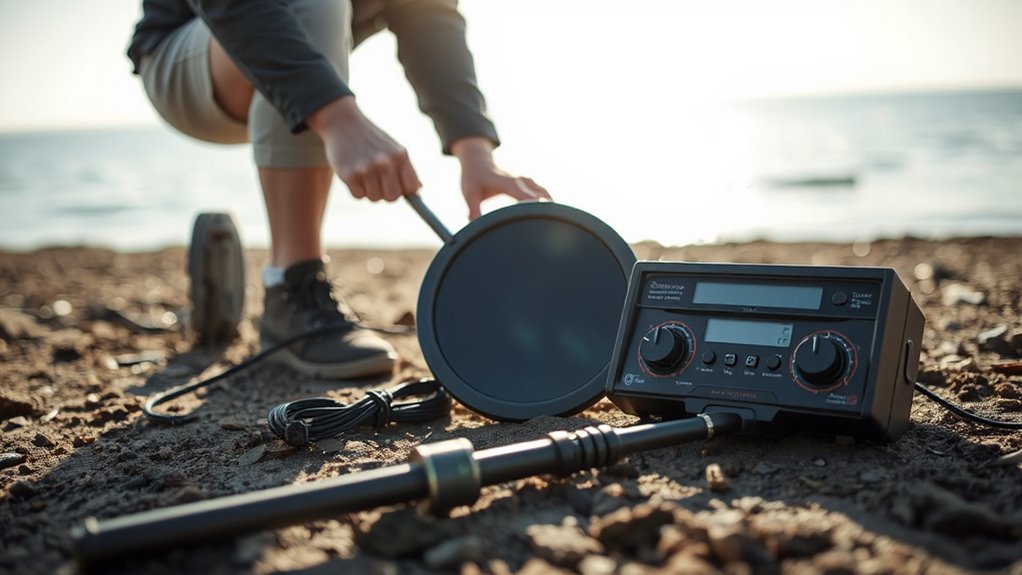
Choosing coils and frequencies sets the depth you can reach, so pick smartly from the start. Think of coil size as the path through deeper soil, and frequency selection as the tuning knob that adapts to targets and ground.
- Larger coils reach deeper, but cover ground more slowly
- Lower frequencies penetrate soil for large, deep targets
- Higher frequencies detect small relics near the surface
- Multi-frequency gear blends depth and sensitivity well
- Match coil size and frequency to soil type and target size
Choose wisely, practice often, and enjoy the hunt as your gear grows with you every day.
A key factor in maximizing depth is proper ground balance technology, which minimizes interference from mineralized soil and enhances target detection at greater depths.
Master Scanning Technique for Real-World Depth
A simple scanning routine can reveal real-world depth and make finds feel almost effortless. You keep your pace steady, listen for faint signals, and adjust as you go with confidence. Start with a comfortable sweep angle and generous coil overlap to cover more ground. Move small steps, glide close to the soil, and watch your meter for clues about deeper targets. If signals chatter, ease up a notch, then tighten the sweep angle and increase coil overlap for cleaner readings. Practice in field conditions, like a park or beach, and celebrate each hint of depth as progress. Depth grows with patience, practice, and smart technique. Your discoveries will keep getting deeper today.
Frequently Asked Questions
How Does Ground Moisture Affect Depth Beyond Balance?
Soil moisture improves conductivity, increasing the effective depth under normal conditions, but excessive moisture can distort mineralization signals and reduce depth beyond balance; you’ll observe greater depth in damp soil, but you still need to re-balance for accurate results.
Do Coil Shape and Angle Impact Depth?
Yes, coil shape and angle influence depth. A larger, smoother coil increases penetration, while the precise angle helps maintain signal coherence. Depth can be optimized by adjusting coil overlap and considering signal width for consistent target results.
Can Detector Depth Be Increased With Custom Search Patterns?
Yes, you can increase effective depth by using custom search patterns. Try spiral scans and overlapping passes to maximize ground coverage while keeping the coil close to the ground. This helps signals add constructively for deeper targets in challenging mineral conditions.
What Is the Role of Wind and Weather on Depth?
Wind and weather influence depth by causing signal interference and noise through scattering and static effects; calm, dry conditions reduce interference and help preserve coherent signals during searches, improving effective depth.
Is Depth Improvement Different for Coins Versus Relics?
Depth improvement differs by target: larger targets like relics tend to exhibit greater depth changes with settings, while coins usually show shallower depths. Focus on target size and signal strength, and adjust sensitivity, coil, and frequency to optimize tracking.
Conclusion
With the right settings, your hunts go deeper and more exciting. Start by boosting sensitivity just enough to hear a steady tone, then fine-tune ground balance. Try a larger coil on a calm day, wander near rocks, and swing slowly. Practice with familiar targets, mark good spots, and compare deep hits to shallow ones. Keep your waterproof gear handy, stay curious, and enjoy every beep as progress. You’ve got this.


